Jaw, bite and airway
Care for how your jaw, bite and airway work, not only how your teeth look. This is where we treat jaw joint pain (TMD), grinding and clenching, and snoring or sleep apnea, and where an airway assessment can explain problems a routine check misses.
- Anaesthetic
- None
A custom oral appliance holds the lower jaw slightly forward while you sleep, which helps keep the airway open. For some people with snoring or mild to moderate obstructive sleep apnea it is an option when a CPAP machine is hard to tolerate. It is one part of care, not a cure on its own. About oral Appliances for Snoring and Sleep Apnea
- Anaesthetic
- Usually none
TMD covers problems with the jaw joint and the muscles around it, which can cause jaw pain, clicking, headaches, and trouble opening wide. Most cases are managed without surgery, often with a custom splint, simple exercises, and habit changes. Care starts with finding what is driving the pain. About TMJ and Jaw Joint (TMD) Treatment
- Anaesthetic
- None
A night guard is a custom fitted cover for your teeth, worn at night to protect them from grinding and clenching. It cushions the teeth, eases strain on the jaw, and helps you avoid the wear and cracks that grinding can cause. We make it from a digital scan for a comfortable, accurate fit. About night Guards for Grinding and Clenching
How it goes.
- 1
We assess the whole system
We examine your jaw movement, muscles and bite, and where needed use a 3D CBCT scan to look at the joint and the airway in detail.
- 2
We find the cause
Jaw pain, worn teeth, headaches and disturbed sleep often share a root. We look for it rather than treating each symptom on its own.
- 3
We treat conservatively first
Most cases are managed without surgery, with a custom splint or appliance, exercises and habit changes, alongside your doctor where sleep is involved.
- 4
We review over time
These conditions can flare, so we check how you respond and adjust, aiming for steady long-term control.
Is it right for you?
Jaw, bite and airway care treats the function behind your teeth. That means jaw joint pain and clicking (TMD), grinding and clenching, and snoring or obstructive sleep apnea. We assess the joint, the bite and the airway together, often with a 3D scan, so treatment targets the cause rather than only the symptom. This is medical care, not cosmetic.
When we'd recommend it
- You have jaw pain, clicking or locking, or headaches linked to your jaw
- You grind or clench, or wake with a sore jaw, worn teeth or disturbed sleep
- You snore or have been told you may have sleep apnea and want an appliance alongside medical care
- A collapsing or uneven bite is straining your teeth, muscles or joints
When we'd suggest something simpler
- Symptoms are recent and mild, where rest, soft foods and easing habits may settle things first
- The main driver is medical, such as an ear or sinus problem or untreated sleep apnea, where the right medical opinion comes first
More about jaw, bite and airway.
Why the jaw, bite and airway belong together
Your teeth do not work alone. The jaw joints, the muscles that move them, the way your teeth meet, and the airway you breathe through are one connected system. When part of it is under strain, the signs show up in more than one place: a clicking or aching jaw, headaches, teeth worn flat from grinding, or broken, unrefreshing sleep.
Treating each sign on its own often misses the cause. Looking at the whole system is what lets us treat the reason, not only the symptom.
Airway analysis, and why it sets us apart
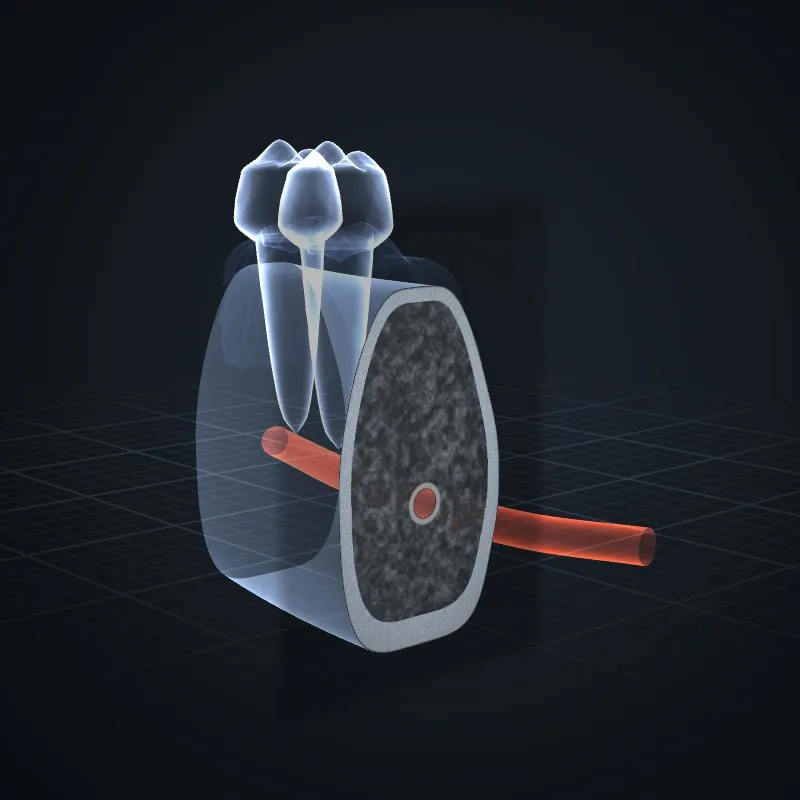
Most dental checks stop at the teeth and gums. We also assess the airway, because a narrow or obstructed airway is a common thread behind grinding, a strained jaw and daytime tiredness. Where it helps, a 3D CBCT scan shows the airway and the jaw joint in detail that a flat X-ray cannot.
An airway assessment is a screening step, not a sleep diagnosis. Where it points to a possible problem, we work with your doctor or a sleep specialist so the medical side is handled properly.
What we treat here
This is where jaw joint pain (TMD), grinding and clenching, and snoring or sleep apnea are managed, alongside the bite problems that often drive them. Each has its own page below, with clear guidance on when treatment helps and when a simpler step comes first.
Who looks after you.
A named specialist leads your care.
Diagnosis and 3D imaging
-
 Dr. Prashant Shirke Oral medicine and radiology, diagnosis
Surgery and bite
-
 Dr. Gautam Laud Oral surgeon and implantologist, 20+ years
-
 Dr. Anirudh Rao Prosthodontics, King's College London
-
 Dr. Abhijnaa Shetty Prosthodontics, replacing teeth
-
 Dr. Simran Moorjani Prosthodontist, smile rehabilitation
Questions people ask first.
What is an airway assessment, and why does it matter?
An airway assessment looks at how well you breathe, especially during sleep, and how your jaw and tongue position affect the space at the back of the throat. A 3D scan can show a narrow airway that a routine dental check would miss. It matters because grinding, a strained jaw and disturbed sleep are often linked to the airway.
Is jaw, bite and airway treatment medical or cosmetic?
It is medical. Jaw joint disorders, grinding and sleep-disordered breathing are health conditions, not appearance concerns. We treat them to relieve pain, protect your teeth and support better sleep, and we work with your doctor where a medical diagnosis is needed.
Do I need surgery for jaw or bite problems?
Usually not. Most jaw joint and bite problems are managed without surgery, using a custom splint, exercises, habit changes and sometimes bite adjustment. Surgery is reserved for the small number of structural cases that do not respond, and we discuss it only when it is genuinely appropriate.
How is grinding connected to sleep and the airway?
Grinding and clenching often happen during sleep and can be linked to disturbed breathing. Where we see heavy wear, a strained jaw and poor sleep together, an airway assessment can help explain why, so we treat the cause and not only the worn teeth.
Meet the specialist first.
Tell us what is on your mind, or send your X-rays. At your first visit a specialist examines you and explains your options, the plan and its price.
Bandra +91 22 4149 8949Kemps Corner +91 22 4149 8959