Basal implants
Basal implants anchor into the dense cortical bone of the jaw, which can make fixed teeth possible for some people who have been told they need a bone graft or sinus lift first. They allow teeth to be fitted soon after surgery.
From ₹25,000
Your exact price follows your examination.
- In chair
- Varies by case
- Visits
- Fewer than grafting first
- Anaesthetic
- Local
- Lasts
- Long-term with care
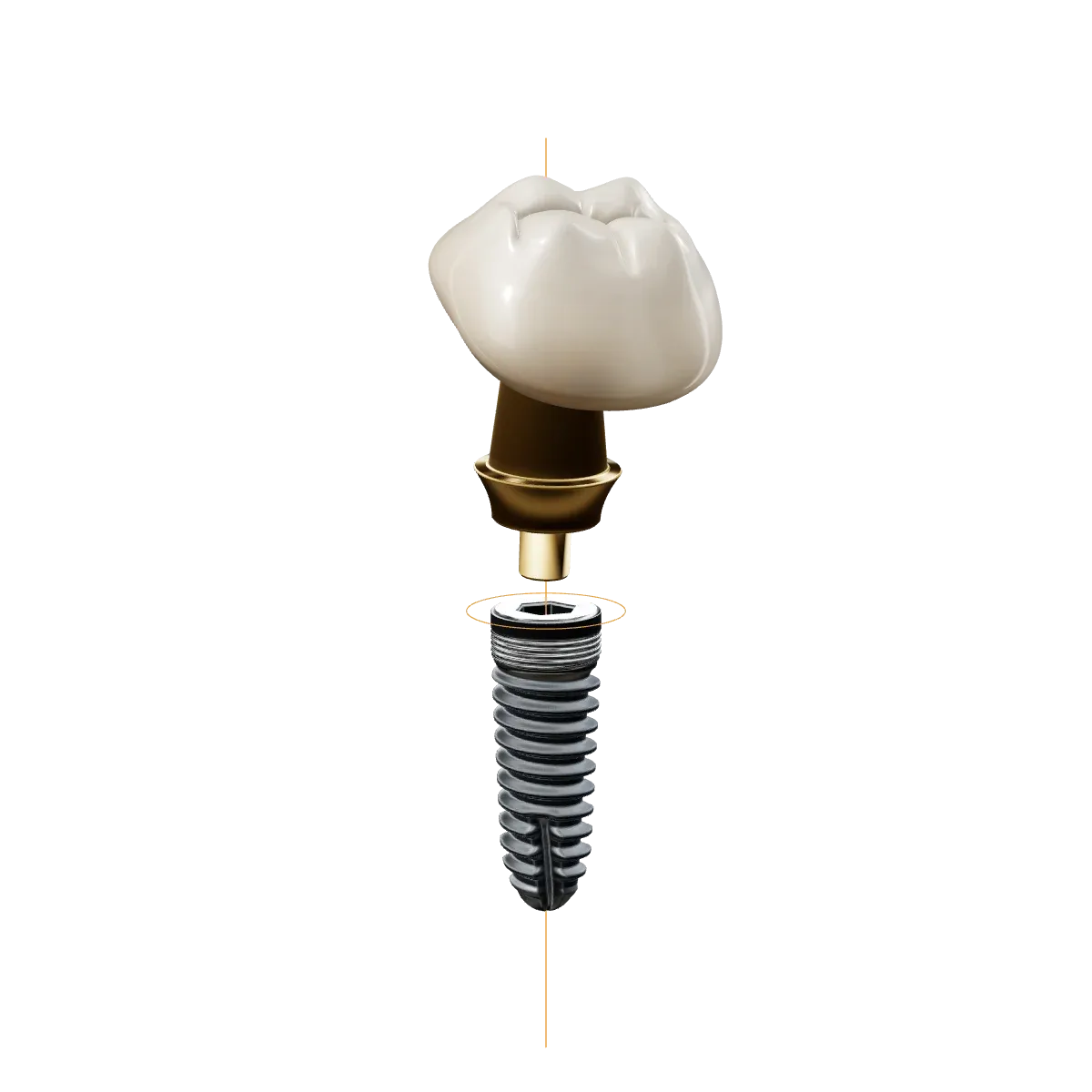
How it goes
- Consultation and scan
A CBCT scan shows your bone volume so we can say whether basal implants, conventional implants, or grafting fits your case.
- Planning
We plan placement into the denser basal bone and agree a written price before starting.
- Placement
Implants are placed under local anaesthetic, often with computer-guided navigation.
- Immediate teeth
In suitable cases a fixed temporary set can be fitted soon after surgery.
- Final teeth
After healing we fit the final fixed bridge.
Is it right for you?
Basal implants anchor into the dense cortical bone of the jaw, which can make fixed teeth possible for some people who were told they need a bone graft or sinus lift first. They allow teeth to be fitted soon after surgery, with fewer visits than a graft-and-heal sequence. Prices start from ₹25,000, quoted in writing before anything begins.
When we'd recommend it
- You have been turned away for conventional implants because your jawbone has resorbed and you were told you need grafting first
- You want fixed teeth fitted soon after surgery rather than waiting through a separate graft-and-heal stage
- You accept that this is one option among several and want an comparison at consultation
When we'd suggest something simpler
- You have enough healthy bone for a conventional implant, which is our usual first recommendation and is very well documented
- You are replacing a single tooth in an area with good bone, where a standard implant or a bridge may be simpler
- You would prefer a widely studied, long-established approach, since conventional systems have longer published track records
Basal implants or Conventional implants?
| Compared on | Basal implants | Conventional implants |
|---|---|---|
| Bone needed | Can use denser deep bone in a resorbed jaw | Needs enough healthy bone, or grafting first |
| Grafting | Often avoided | Sometimes needed before placement |
| Time to fixed teeth | Soon after surgery in suitable cases | Usually after a healing period |
| Track record | Shorter published history | Longest published track record |
| Upfront cost | From ₹25,000 | Can be lower for a straightforward single tooth |
About basal implants.
What basal implants are
A basal implant is a type of dental implant that anchors into the basal, or cortical, layer of the jaw. This bone is denser than the spongy bone nearer the tooth sockets, so basal implants can sometimes gain stability in jaws that have lost height and would not hold a conventional implant without grafting first.
They are often used to support a full fixed bridge, and in suitable cases teeth can be fitted soon after surgery.
Who it is for
Basal implants are worth discussing if you have been told your bone is too thin for conventional implants and that you need a sinus lift or bone graft before treatment. Because they can use the deeper bone, they may avoid that extra surgery for some patients.
We recommend conventional implant systems first for most people, because they have the longest published track record. Basal implants are offered as one option, and we will tell you plainly which approach suits your situation after reviewing your scan.
What to expect
Placement is done under local anaesthetic, so the procedure itself should not be painful. We commonly use computer-guided navigation to place implants accurately in what can be complex anatomy.
Because basal implants often avoid grafting, treatment time can be shorter and the surgery less involved than a graft-and-implant sequence. Mild soreness for a few days afterwards is normal and is managed with standard pain relief.
Recovery and aftercare
Recovery is usually comparable to other implant surgery. Stick to softer foods at first, keep the area clean, and follow the aftercare instructions we give you.
Long-term success depends on good daily hygiene and regular check-ups. No dentist can promise a perfect outcome for everyone, and careful planning matters more than any single technique.
Cost, visits, and comfort
Basal implant treatment starts from ₹25,000, with the total depending on how many implants you need and the type of bridge. Avoiding a separate graft stage can reduce both cost and the number of visits for some patients.
You will get a clear written price before anything begins, with the scan and any extras itemised. The work is done under local anaesthetic, and guided placement keeps the surgery precise and the recovery straightforward.
Other ways to replace a tooth.
If this is not the right answer, one of these may be. Your specialist will explain which.
Other implant treatments
- Single-tooth implantOne tooth, without touching its neighbours₹45,000
- Same-day implantsFixed temporary teeth on the day of surgery, where suitable₹35,000
- All-on-4 implantsA full jaw of fixed teeth on four implants₹4,00,000 per arch
- Zygomatic implantsAnchored in the cheekbone, for severe upper-jaw bone loss₹6,00,000 per arch
Prices show where treatment starts. Your exact price follows your examination.
Questions people ask first.
How much do basal implants cost?
Basal implant treatment starts from ₹25,000, with the total depending on how many implants you need and the type of bridge. Avoiding a separate graft stage can reduce the overall cost for some patients. You get an itemised written price before anything begins, with nothing added later without your agreement.
Do basal implants hurt?
Placement is done under local anaesthetic, so you feel pressure rather than pain during the procedure. Mild soreness for a few days afterwards is normal and settles with standard pain relief. Because grafting is often avoided, the surgery can be less involved than a graft-and-implant sequence.
How many visits do basal implants take?
Usually fewer than a graft-and-heal sequence, because the denser bone can let teeth be fitted soon after surgery rather than after a separate graft stage. The exact number depends on your case, and we plan it with you in writing at consultation.
How long do basal implants last?
Basal implants are meant as a long-term replacement, and with good daily hygiene and regular check-ups they can last many years. No dentist can promise a result for everyone, so we tell you what will protect yours and set realistic expectations up front.
Can I have basal implants if I was told I need a bone graft?
Often yes. Because basal implants anchor into the deeper cortical bone, they can sometimes gain stability in a jaw that has lost height and would not hold a conventional implant without grafting first. A CBCT scan at consultation is the only reliable way to confirm this for your case.
How are basal implants different from conventional implants?
Conventional implants sit in the spongy bone near the tooth sockets and have the longest published track record, which is why we recommend them first for most people. Basal implants use the denser deep bone, so they can suit some people with jawbone loss and often avoid grafting. We will tell you plainly which fits your case.
Ask us before you decide.
Send your question or your X-rays. At your first visit a specialist examines you and explains your options, the plan and its price.
Bandra +91 22 4149 8949Kemps Corner +91 22 4149 8959