Gummy smile (excess gum on show)
A gummy smile just means more gum shows above your top teeth than you would like when you smile. It is usually a matter of proportion between your teeth, gums and lip, not a sign that anything is wrong. In most cases it needs no treatment at all, and when you do want a change there are well-understood ways to improve it.
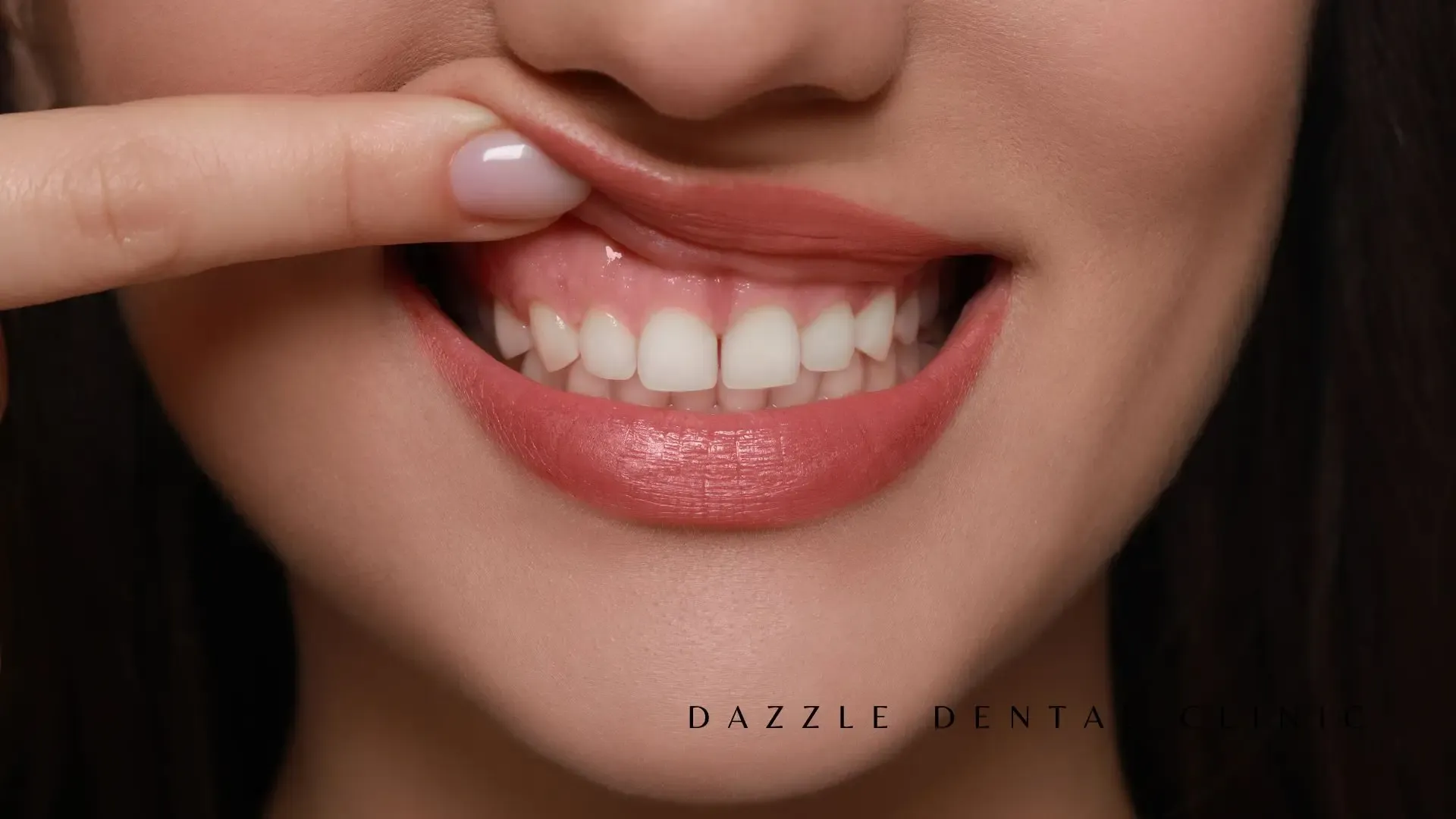
A gummy smile, which dentists call excessive gingival display, is when a larger band of gum shows above your upper teeth as you smile. As a rough guide, more than about 3 millimetres of visible gum is often described this way. It is common and harmless, and many people never think twice about it.
The reason varies from person to person. Sometimes the gum tissue simply covers more of the tooth than average, so the teeth look short. Sometimes the teeth are genuinely short or a little worn. In other cases the upper lip lifts higher than usual when you smile, or the upper jaw has grown slightly more vertically. Knowing which of these applies to you is what decides the right approach, so a proper look in the chair comes first.
Your options
There is a clear order here, and doing nothing is a valid choice. From simplest to most clinical:
- No treatment. A gummy smile is cosmetic, not a health problem. If it does not bother you, nothing needs to be done.
- Gum reshaping (gingivectomy). When extra gum is covering the teeth, a small amount can be trimmed and reshaped, often with a laser, to show more of the tooth. This is done under local anaesthetic.
- Crown lengthening. If both gum and a little underlying bone need reshaping, this exposes more tooth surface and gives a more even gum line. It is also useful before crowns or veneers.
- Braces or clear aligners. When the cause is how the teeth or jaw sit, moving the teeth can reduce how much gum shows, without surgery.
- Lip repositioning or muscle relaxant injections. When a high, active upper lip is the cause, these limit how far the lip lifts. Injections are temporary and wear off in a few months.
- Jaw surgery (orthognathic surgery). Reserved for cases driven by significant jaw growth. It is a larger procedure planned carefully and used only when simpler options will not address the cause.
What causes a gummy smile?
There are a few common causes: gum tissue that covers more of the tooth than usual, teeth that are naturally short or worn, an upper lip that lifts high when you smile, or the way the upper jaw has developed. More than one can be involved at once. Because the treatment depends entirely on the cause, an examination is the starting point rather than assuming.
Do I need to treat a gummy smile?
No. A gummy smile is about appearance, not oral health, so treatment is entirely your choice. It is worth considering only if the gum display bothers you day to day. If it does, we will talk through the least invasive option that fits your cause first, along with what it costs, before anything more involved is discussed.
Will treatment be painful?
Most options, such as gum reshaping and crown lengthening, are done under local anaesthetic so the area is numb during the procedure. There can be some tenderness for a few days afterwards, which is usually managed with simple pain relief and clear aftercare instructions. Injections and aligners involve little to no discomfort. We will tell you what to expect for the specific option you choose.
If you would like to look at treatment
There is no rush and no pressure to book. When you are ready, read through the options for general and restorative care, or ask us a question first.
Bandra +91 22 4149 8949Kemps Corner +91 22 4149 8959