Bleeding gums
Gums that bleed when you brush or floss are common and are usually an early warning sign rather than an emergency. In most cases the cause is a buildup of plaque along the gum line, which responds well to better cleaning and a professional check. Caught early, bleeding gums are very treatable.
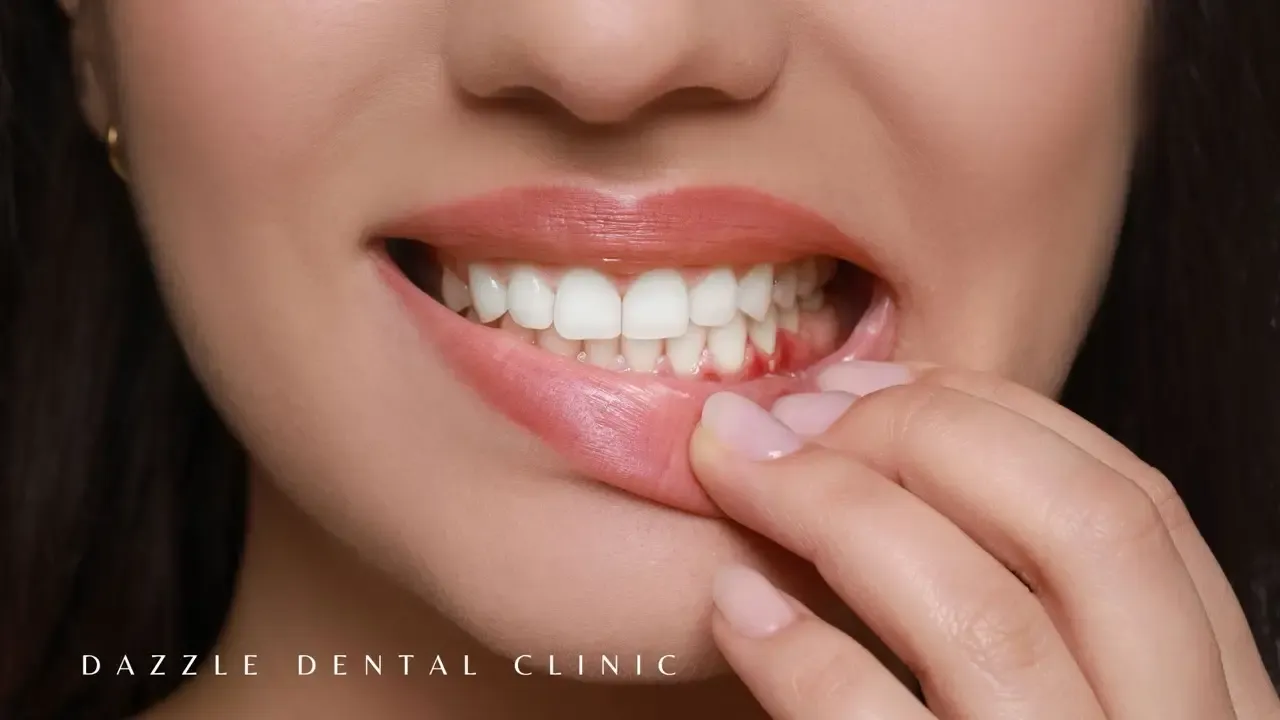
Gums that bleed when you brush or floss are most often a sign of gingivitis, the earliest stage of gum disease. It happens when plaque collects along the gum line and irritates the tissue, leaving gums red, puffy and quick to bleed. At this stage the changes can usually be reversed with better cleaning and a professional clean.
If plaque is left to harden and spread below the gum line, gingivitis can progress to periodontitis, a more serious form that can affect the bone that holds teeth in place. Bleeding can also be linked to vitamin deficiencies, hormonal changes such as pregnancy, and some medications, so it is worth getting a proper look rather than guessing.
Your options
Start with the gentlest steps and move to clinical treatment only if the bleeding continues.
- Keep cleaning gently but consistently. Brush twice a day and clean between your teeth daily; mild bleeding often settles within a week or two once plaque is removed regularly.
- Check your technique and tools. A soft brush and correct flossing help, and a dentist can show you what you might be missing.
- Have a professional clean. A dentist or hygienist removes tartar that brushing cannot shift, which is often what stops the bleeding.
- Consider scaling and root planing. For deeper deposits below the gum line, this careful deep clean of the roots is the usual next step.
- Explore gum treatment for advanced cases. If gum disease is more established, a dentist can discuss further gum treatment options and what each involves.
Why do my gums bleed when I brush?
Bleeding during brushing is usually a sign of gingivitis, caused by plaque sitting along the gum line. The gums become inflamed and bleed easily. Improving your daily cleaning and having a professional clean often resolves it, because the trigger is being removed.
Are bleeding gums serious?
Often they are not, especially if caught early, but they should not be ignored. Ongoing bleeding can be a sign of periodontitis or, less commonly, a wider health issue. If the bleeding is persistent, heavy, or comes with loose teeth or bad breath, see a dentist to find the cause.
Is it normal for gums to bleed during pregnancy?
Hormonal changes in pregnancy can make gums more sensitive and prone to bleeding, sometimes called pregnancy gingivitis. Keeping up gentle, regular cleaning and having routine dental check-ups helps manage it. Let your dentist know you are pregnant so they can tailor their advice.
If you would like to look at treatment
There is no rush and no pressure to book. When you are ready, read through the options for general and restorative care, or ask us a question first.
Bandra +91 22 4149 8949Kemps Corner +91 22 4149 8959